Why Spoken English Classes Don't Work for Everyone
Spoken English classes help some learners but leave many behind. Explore why traditional methods fail introverts and professionals, and what alternatives actually work.
Spoken English classes promise confidence and fluency. For some learners, they deliver. For many others, they don't.
This isn't because learners are lazy or incapable — it's because people learn differently, and most classrooms aren't designed for that diversity. If you've tried English classes and still feel stuck when speaking, this isn't a you problem. It's a method problem.
Who Struggles Most in Traditional Classes
Certain types of learners consistently find classroom-based spoken English instruction difficult:
- Introverts who need quiet thinking time before speaking
- Anxious speakers who shut down when put on the spot
- Working professionals with rigid schedules who can't attend regularly
- Learners who fear public mistakes and avoid speaking to protect themselves
- People who need repetition but feel embarrassed asking to repeat a scenario
When speaking feels like a performance in front of an audience, learning slows down dramatically. The emotional cost of each mistake outweighs the learning benefit.
The Structural Problems With Classroom Learning
Even well-designed spoken English classes carry inherent limitations:
You don't get enough speaking time
In a class of 8–12 students, each person might speak for 5–10 minutes per session. That's not enough to build fluency. Fluency requires volume — hundreds of hours of actual output, not observation.
The pace rarely matches your readiness
Class curriculum moves forward on a schedule, not when you feel ready. Many learners move on before they've internalized what they just practiced, leaving gaps that compound over time.
Mistakes happen in public
Having your errors corrected in front of peers — even kindly — activates social anxiety. The brain files this experience as "speaking English = risk of embarrassment," which makes future speaking harder, not easier.
Fixed schedules create gaps
Missing a few classes due to work or life disrupts the consistency that language learning requires. Irregular practice sessions yield irregular results.
What Self-Paced, AI-Based Practice Offers Instead
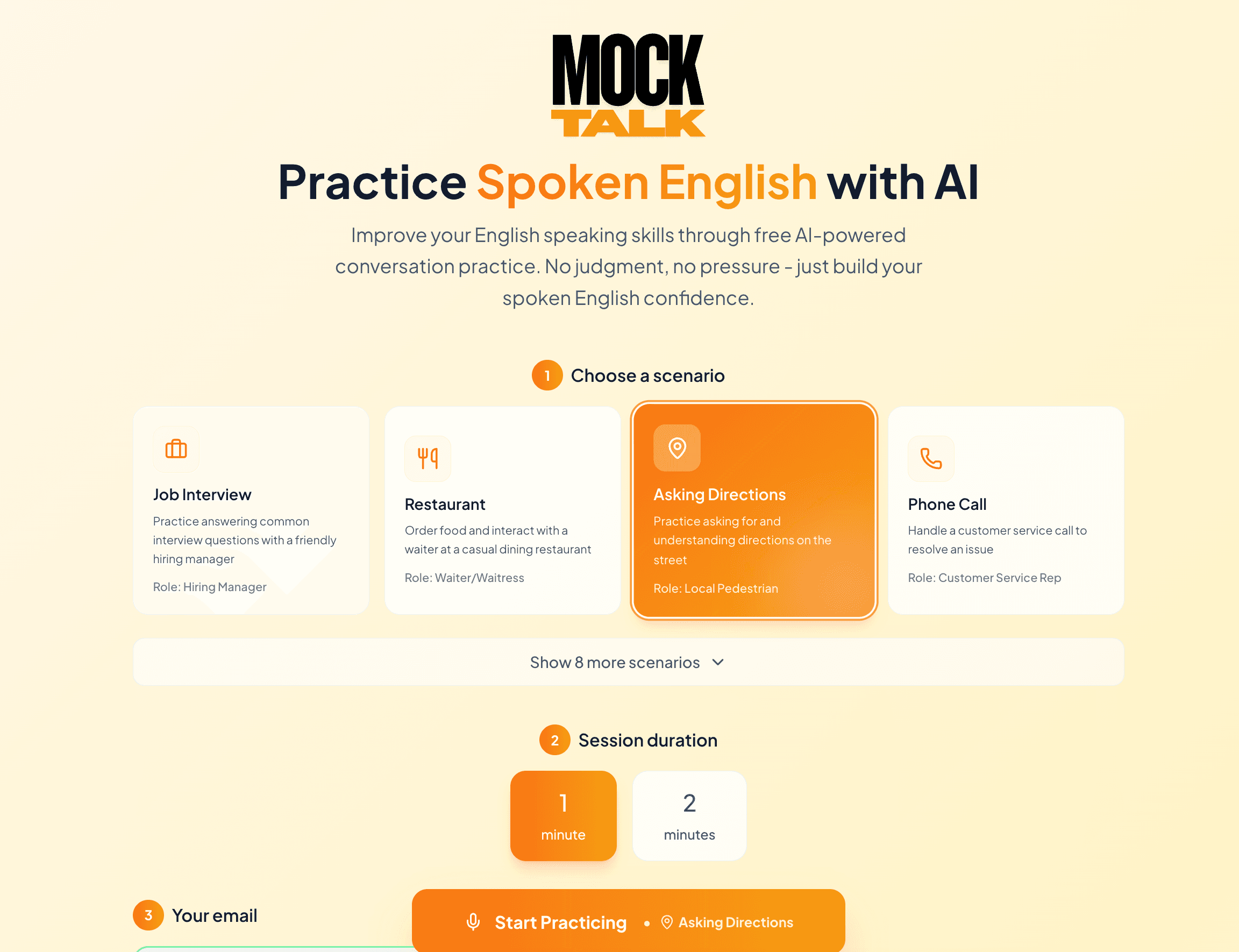
AI-powered platforms like MockTalk offer a fundamentally different environment:
- Private — no one hears you struggle
- Flexible — practice at 6am or 11pm, for 3 minutes or 30
- Unlimited repetition — run the same scenario 20 times if you need to
- Scenario-based — practice the exact situations you face in real life
- Gentle, non-judgmental feedback — improvement tips without social sting
For learners who've been held back by the classroom environment, this removes the single biggest blocker: fear.
Scenarios That Map Directly to Real Life
One of the biggest advantages of self-directed AI practice is that you choose exactly what to work on. If you have a job interview coming up, you can practice that specific scenario every day until it feels natural.
If you struggle with phone calls, you can work on a customer service phone call scenario in private before making a real one.
Other scenarios that learners find particularly useful:
- Restaurant ordering — mastering food vocabulary and polite requests
- Meeting introductions — small talk with new colleagues
- Banking conversations — discussing accounts and services clearly
When Classes Still Make Sense
Classes work well when:
- You enjoy group interaction and thrive in social learning environments
- Your speaking confidence is already reasonably high
- The goal is a certification like IELTS or TOEFL
- You have access to a skilled teacher who manages participation carefully
AI tools aren't a replacement for everything — they're a better starting point for learners who aren't ready to perform in front of others yet.
The Right Path Is the One You'll Actually Use
The best learning method is the one you'll stick with consistently.
If speaking in front of others feels intimidating, start privately. Build confidence in your own space, at your own pace. Fluency grows through repeated, low-pressure conversations — not through performing for an audience before you're ready.
When you're confident privately, stepping into real conversations becomes far less frightening.
Practice spoken English in a judgment-free environment — free, no download needed.